
Building Sakhi: Preserving Community Wisdom Through MIT App Inventor
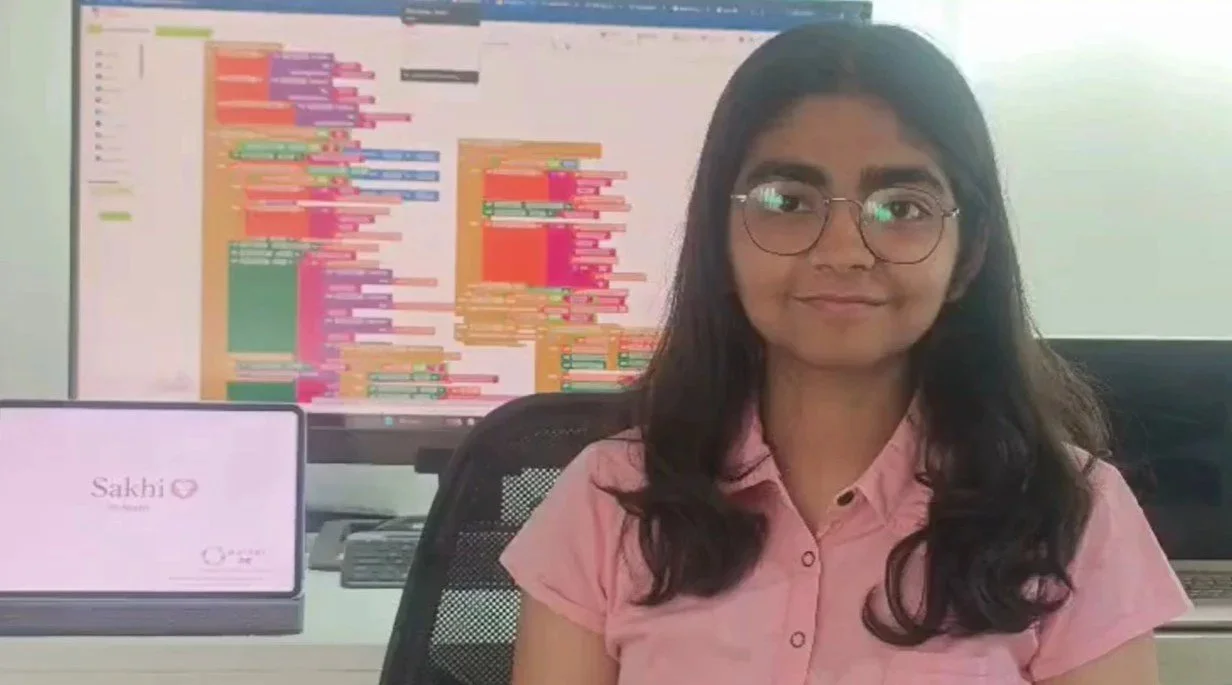
Anisha Sharma
Written by Anisha Sharma, Grade-12, Vasant Valley School — Delhi, India
Over the summer, I was volunteering with Maitri, a community that supports first-generation girls and young women from low-income backgrounds as they navigate school, college, and early work. As I spent more time listening to the girls there, I began noticing a pattern. The questions changed slightly from one person to another, but the underlying problem stayed the same: girls were trying to make high-stakes decisions with very limited guidance close at hand. They were asking about scholarships, internships, confidence, family pressure, self-doubt, and what to do next, often while being the first in their family to face these decisions.
What stood out most was that the problem was not a complete absence of wisdom. In many cases, the answers already existed somewhere in the community. A senior had likely faced the same uncertainty the year before. Someone else had already figured out how to apply for a scholarship, adjust to college, or manage the fear of feeling behind. But when girls moved on, much of that lived experience moved with them. The next batch was left to start again.
The questions stayed, but the guidance disappeared.
That was the starting point for Sakhi.
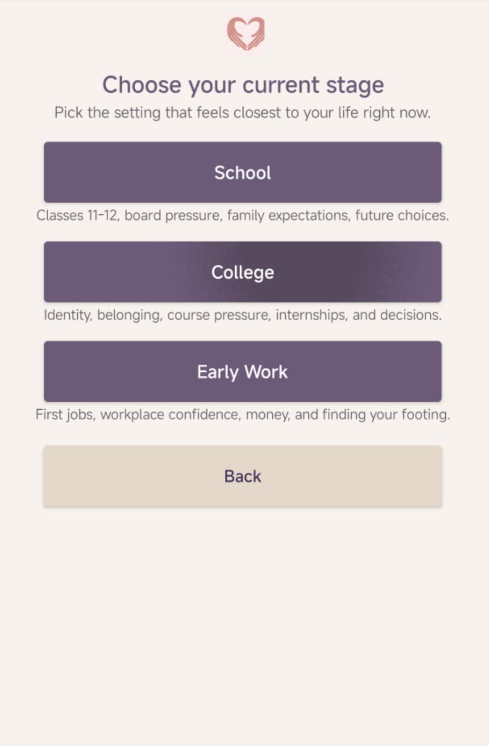
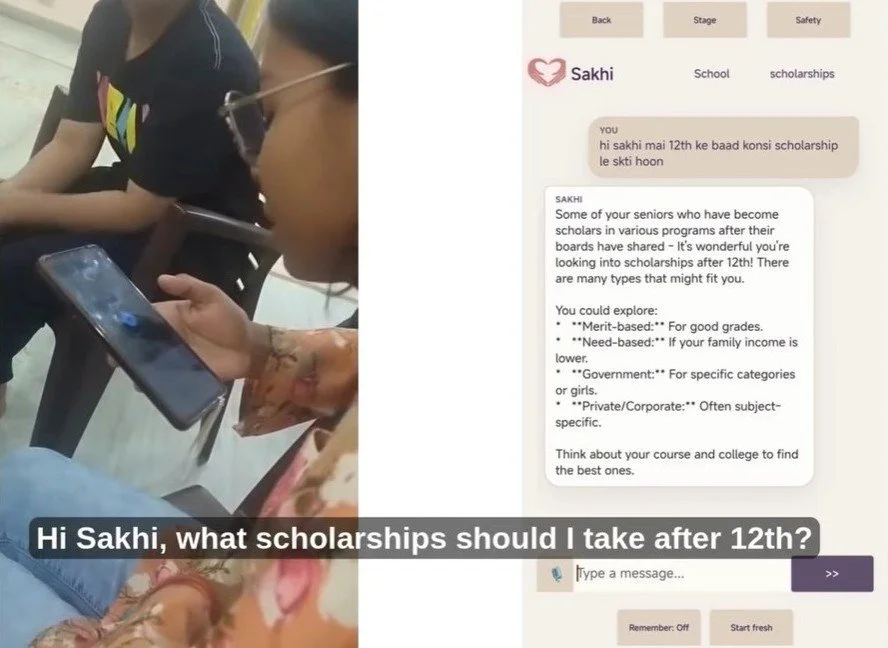
Sakhi is an AI-supported reflection companion built with MIT App Inventor to help first-generation girls and young women navigate transitions with support that feels calm, relevant, and grounded in lived experience. The goal was never to build a generic chatbot that simply produced polished answers. The goal was to build something that could preserve community wisdom and make it accessible when it was needed most. That is why Sakhi uses anonymized responses from past Maitri participants, seniors, and alumni as part of its knowledge base. These responses help substantiate newer reflections so that the app is not speaking in a vacuum, but with awareness of patterns, concerns, and lived experiences that have already emerged within the community.
MIT App Inventor was central to shaping that experience. It was not just the tool used to build screens. It was the reason the project could move from an observation in the field to a working app that could be tested, revised, and improved with real users. Because Sakhi needed rapid iteration, stage-based flows, and a conversation interface that could evolve through live feedback, App Inventor made it possible to focus on the user experience instead of getting slowed down by traditional mobile development. Without it, Sakhi would likely have remained an idea or a much slower prototype rather than something girls could actually open and use on their phones.
Sakhi had to feel human. If it sounded robotic, emotionally flat, or overly formal, girls would disengage immediately. So it was designed to be warm, non-judgmental, and conversational while still staying clear and practical. A user can begin by selecting the transition stage closest to her life, whether school, college, or early work, so the app can respond with the right context. It also reflects recurring concern areas identified through community patterns, supports open-ended conversation in a chat-style interface, and is designed to understand and translate Hindi so that girls are not forced into English when expressing something personal or urgent. All of these features serve the same goal: making the app feel familiar, accessible, and believable enough that a girl would actually want to keep talking to it.
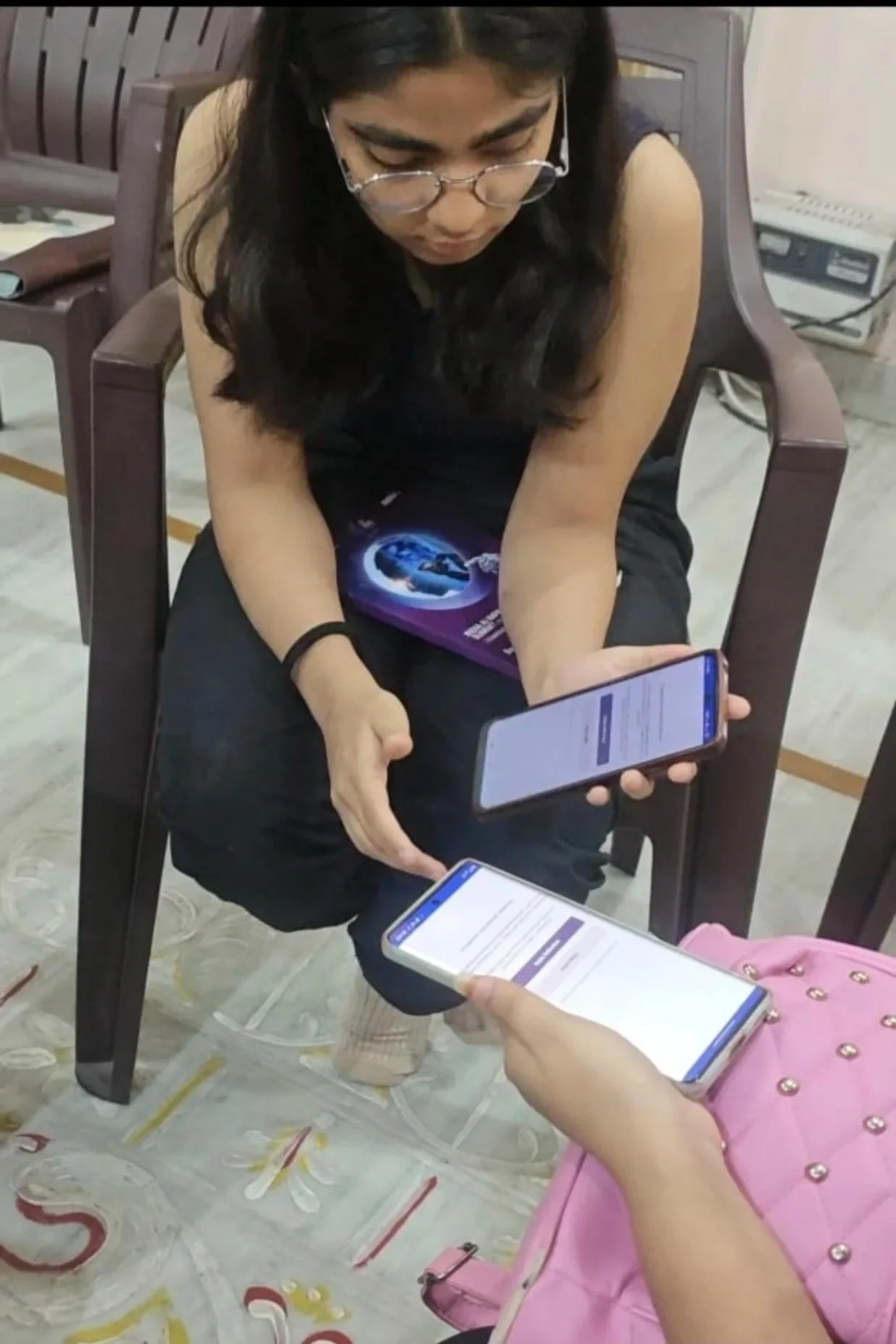
Once Sakhi reached a working stage, it was tested with girls from the target audience in the Maitri community. That part mattered as much as the build itself. A project like this cannot be judged only by whether it runs; it has to be judged by whether it actually feels useful to the people it is meant for. In an early pilot sub-cohort of thirty users, 66.7 percent said they felt supported, 33.3 percent said they felt more confident, and 100 percent said they would come back to use the app again. These were encouraging signs not because they proved the system was finished, but because they showed that the app was resonating with real users. Girls felt that Sakhi was relevant to their lives and supportive in moments of uncertainty.
Sakhi has already been recognized as a case study in the IndiaAI and UN Women casebook on AI and Gender Empowerment, highlighting its community-grounded approach to responsible AI. That is what makes it a strong case study not only in building for one community, but in how tools like MIT App Inventor can be used to preserve human insight and carry it forward at scale.