Meet the Winners of the 2026 Global Appathon
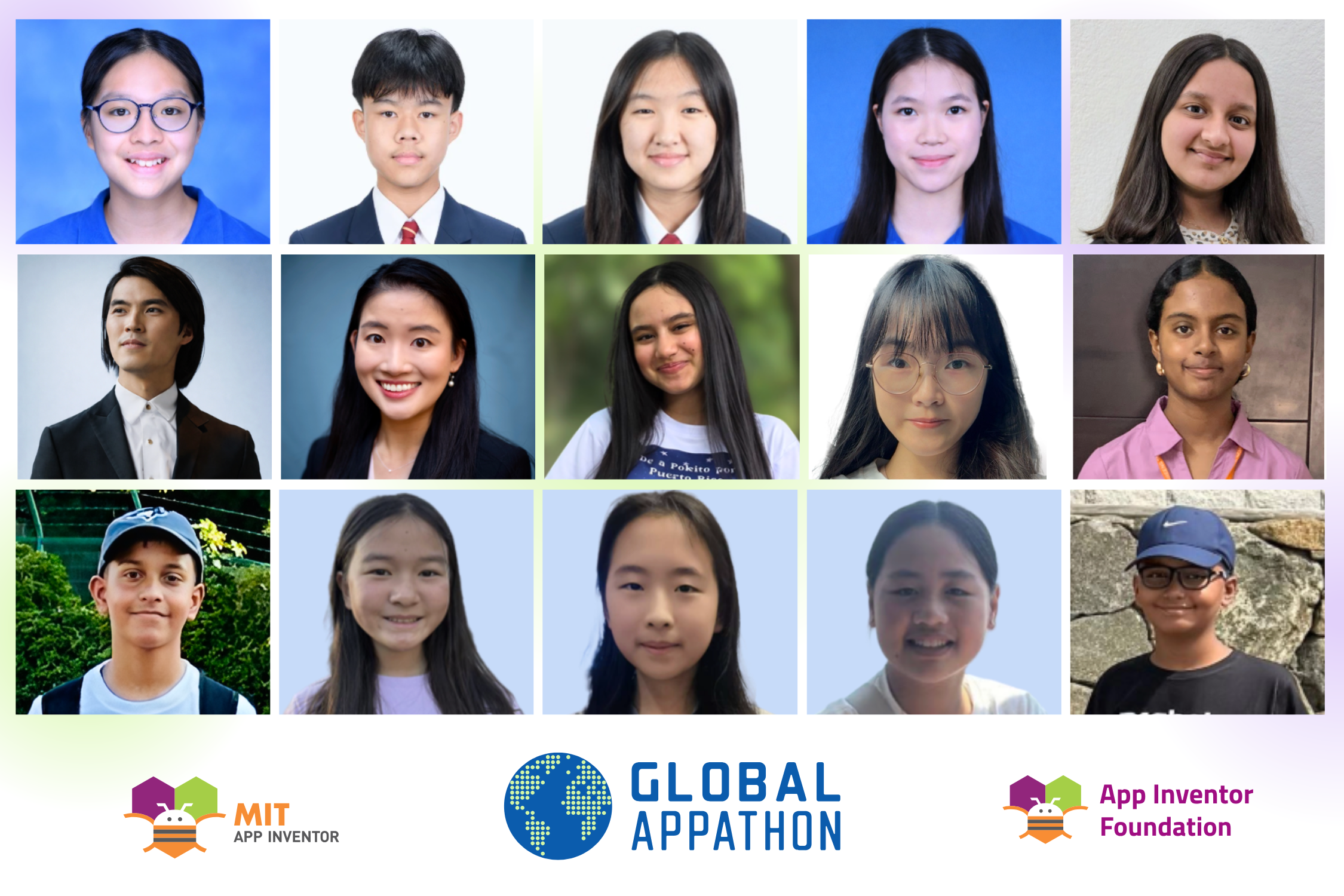
2,176 participants from 141 countries and regions joined the Global Appathon to create mobile apps that address real-world challenges through the lens of the United Nations Sustainable Development Goals.
Preview: 2,176 participants from 141 countries and regions joined the Global Appathon to create mobile apps that address real-world challenges through the lens of the United Nations Sustainable Development Goals.
The Global Appathon starts with a simple idea: technology can be a tool for meaningful community change. Hosted by the App Inventor Foundation and MIT App Inventor, this free virtual hackathon challenges innovators worldwide to build mobile apps for a cause guided by the United Nations Sustainable Development Goals (SDGs). This year's competition marks an evolution from the Global AI Hackathon—which ran for the past two years and required participants to incorporate AI into their projects—to a broader challenge open to all mobile app builders, regardless of what tools or technologies they use.
The response was remarkable. 2,176 people registered this year, a 66% jump from last year. Participants joined from 141 countries and regions around the world, with 69% coming from developing or emerging economies. The youngest participant was 6 years old and the oldest 84 years old, with a median age of 17.
The most frequently addressed SDGs were SDG 3 (Good Health and Well-Being), SDG 4 (Quality Education), and SDG 12 (Responsible Consumption and Production). Submissions were evaluated by a panel of expert judges, including partners from across academia, government, industry, and K-12 education. Judges assessed each project for creativity, design, impact, and technical skill based on the team’s presentation, pitch video, and mobile app submission.
The numbers only tell part of the story. Over 90% of surveyed participants said they want to keep improving their app after the competition ends—and that they believe it can make a real difference in their community.
The winning apps and honorable mentions are invited to the MIT App Inventor Global Education Summit at MIT’s Stata Center in Cambridge, Massachusetts, on July 6–8, 2026. Read on for a look at this year’s winning and special prize projects.
Watch the Global Appathon 2026 Winners Announcement HERE.
Winners
Junior Team Winner: SCENAR
By Mohammed Hamzah Siddiqui and Mohammed Hamdan Siddiqui from the United Arab Emirates
Every year, lives are lost not because help is unavailable, but because critical information does not reach first responders quickly or clearly enough. Connected to UN SDG 3: Good Health and Well-Being and UN SDG 11: Sustainable Cities and Communities, SCENAR is an emergency response app that uses AI to organize incident information into a standardized report format for first responders. With features such as personal medical profiles, hospital routing, and emergency guidance, SCENAR helps ensure that when every second counts, both the person in crisis and those helping them have the information they need.
Junior Individual Winner: Food Flow
By Ahana Chatterjee from the United States
Many people have problems with food in different ways. Some people do not understand what is in their food, some cannot easily find food when they need it, and others do not know how to use the food they already have. This can lead to unhealthy eating and a lot of food being wasted. This problem is important because it connects to Zero Hunger and Good Health. Food Flow transforms how people interact with food by combining AI-driven insights, real-time food access, and recipe generation in one platform. It empowers healthier choices while reducing food waste and improving access to food for all.
Youth Team Winner: Hearo
By Alina Li, Audrey Deng, and Alice Lin from the United States
Hearo is an AI-powered app that helps children with hearing impairments improve their speech and listening skills through engaging practice between therapy sessions. Inspired by Alice’s brother, Eric, who was born with a hearing impairment and continues to face challenges learning to speak even after receiving a cochlear implant, the team created Hearo to make home practice more effective, motivating, and accessible. Recognizing that more than 34 million children worldwide live with disabling hearing loss, Hearo helps children build confidence and find their voices.
Youth Team Winner: Ecobin
By Piyatida Luangon, Atisha Thaviyonchai, Kin Supabundit, and Kornsiripatchara Damrongrat from Thailand
EcoBin helps households, street vendors, and restaurants recycle used cooking oil instead of pouring it down drains. Inspired by interviews with local market vendors, the team found that small amounts of oil are often discarded because recycling is inconvenient. Connected to UN SDG 12: Responsible Consumption and Production, the app connects users with nearby smart recycling bins, tracks their environmental impact, and offers rewards. An AI-powered smart bin identifies and measures the oil before logging it into the user’s account.
Youth Individual Winner: KisanSaathi
By Deeksha Parvata Reddy from India
Farmers’ crops are often ruined not because they lack resources, but because they do not have timely guidance on what to do. KisanSaathi, meaning “farmer’s friend” in Hindi, is an AI-powered leaf disease detector app that allows farmers to scan crop leaves, classify their health condition, and receive personalized advice based on location, weather, crop type, and more. Inspired by the goal of supporting farmers, who make up a large part of India’s population, KisanSaathi also includes offline mode, a personal chatbot, scan history, and voice output in regional languages.
Youth Individual Winner: Oikos
By Ana Lucía Pérez Escalera from Puerto Rico
Oikos: EcoHealth Companion helps users track health symptoms and better understand the connection between environmental risks, pollution, and health. Inspired by the creator’s experience in a town affected by industrial pollution, the app helps raise awareness of how environmental risks can impact health. Connected to UN SDG 3: Good Health and Well-Being, UN SDG 11: Sustainable Cities and Communities, and UN SDG 13: Climate Action, Oikos offers a simple, mostly offline interface where users can log symptoms, receive alerts and recommendations, and potentially contribute data to help researchers study pollution-related health risks.
Adult Individual Winner: EyeGuard
By Tsz Wah Evelyn Ho from Hong Kong
EyeGuard is an AI-powered mobile application designed to combat digital eye strain among Hong Kong students through real-time AI fatigue detection, clinical OSDI diagnostics, customizable reminders, and audio-guided eye exercises. As a secondary school Mathematics and Information Technology teacher, the creator was deeply concerned by students’ daily struggles with dry eyes and blurry vision. EyeGuard aims to transform passive eye strain into an active wellness routine, helping ensure that students’ digital future does not come at the cost of their sight.
All Ages Team Winner: MoleCheck
By Nicholas Kwok and Jessica Wu from the United States
Melanoma is the 6th most common cancer in the United States and the 18th worldwide, and survival rates vary greatly depending on how early it is detected. MoleCheck is developed by a team of doctors to help users triage melanoma-related hyper-pigmented skin lesions by identifying whether they may require medical attention or can be monitored at home. Since access to primary care doctors or dermatologists can be limited for people with inadequate insurance, lower socioeconomic status, or those living in rural areas, MoleCheck aims to support more informed screening decisions and help reduce gaps in health outcomes.
Honorable Mentions
Honorable Mention: SafeEat
By Paarth Aggarwal from the United Kingdom
SafeEat is an AI-powered food ingredient list scanner designed for elderly and visually impaired users to help them make informed food choices based on their personal allergies, intolerances, and dietary restrictions. SafeEat makes ingredient labels easier to understand and helps users determine whether a product is safe to eat, regardless of age, ability, location, or technical literacy. SafeEat is recognized for its strong contribution in improving accessibility especially for elderly and visually impaired users.
Watch SafeEat’s pitch video HERE.
Honorable Mention: PupJoy
By Qingyu “Larry” Kong from United States
PupJoy helps reduce pet anxiety and fear by playing music that is validated by a custom AI model. Using community testing data from youth volunteer musicians and testers, the app helps identify songs that can calm pets during stressful moments and bring them comfort through music. PupJoy is recognized for outstanding creativity and design.
Watch PupJoy’s pitch video HERE.
Honorable Mention: AirBeat
By Kawin Chamnanchak, Parn Keskarn, and Pankan Kruemkangplu from Thailand
AirBeat makes music more accessible by turning a smartphone camera into a real instrument using real-time AI gesture detection, so users only need their hands and a phone. Connected to UN SDG 4: Quality Education, the app addresses barriers to inclusive creative learning by providing a free and accessible alternative for students who may not have access to traditional musical instruments or music education resources. AirBeat is recognized for outstanding creativity.
Watch AirBeat’s pitch video HERE.
Honorable Mention: MaternalCare
By Deborah En Xuan Wong, Kai Rou Loon, Isabelle Yi Shin Hii, and Meghan Mei Ern Wee from Malaysia
MaternalCare is an AI-powered mobile app that protects and supports expectant mothers through real-time emergency alerts, health monitoring, and personalized pregnancy guidance. By combining fall detection, SOS features, health tracking, and an AI assistant, it ensures mothers stay safe, informed, and connected throughout their pregnancy journey. MaternalCare is recognized for exceptional design.
Watch MaternalCare’s pitch video HERE.
Honorable Mention: FutureMe
By Olivia Minn from United States
FutureMe is a self-care app that enables users to record personalized voice messages of encouragement for each of 10 negative emotions, such as sadness, stress, and loneliness. When feeling down, they can simply tap the emotion and hear their own voice delivering authentic and immediate comfort: “my voice, my comfort.” FutureMe is recognized as a practical solution with immediate application.
Watch FutureMe’s pitch video HERE.
Honorable Mention: Kinesign
By Manuel Toscanini and Lucas Ortiz from Uruguay
Kinesign is an AI-powered app that translates sign language into text and speech in real time. The app addresses communication barriers faced by people with hearing impairments in Uruguay, particularly those who use Uruguayan Sign Language (LSU), helping make everyday communication more accessible and inclusive. Kinesign is recognized for its strong contribution in improving communication with and for people with disabilities.
Watch Kinesign’s pitch video HERE.
Honorable Mention: RescueRadar
By Rufan Yin from United States
RescueRadar is a ground terminal application specifically designed for disaster relief. In coordination with AI-powered search and rescue UAVs, it operates in off-grid environments, transforming any standard smartphone into a search terminal capable of executing rescue missions, sharing critical data, and enabling team communication. RescueRadar is recognized for its exceptional use of hardware.
Watch RescueRadar’s pitch video HERE.