Blocks, AI, and Access: App Inventor at the 2026 Blockly Summit
Can blocks serve as powerful abstractions in the era of AI-assisted coding? How can we increase the accessibility of programming for people with disabilities or who may have limited connectivity? Those were some of the questions the App Inventor lab and foundation teams addressed on June 3-4 at the University of Cambridge, part of the 2026 Blockly Summit, now hosted by the Raspberry Pi Foundation.
It was a fantastic two days of learning and sharing with the blocks-based programming community, where we touched on ideas that blocks can serve as powerful abstractions in the era of AI-assisted coding and how to increase the accessibility of programming for people with disabilities or who may have limited connectivity.
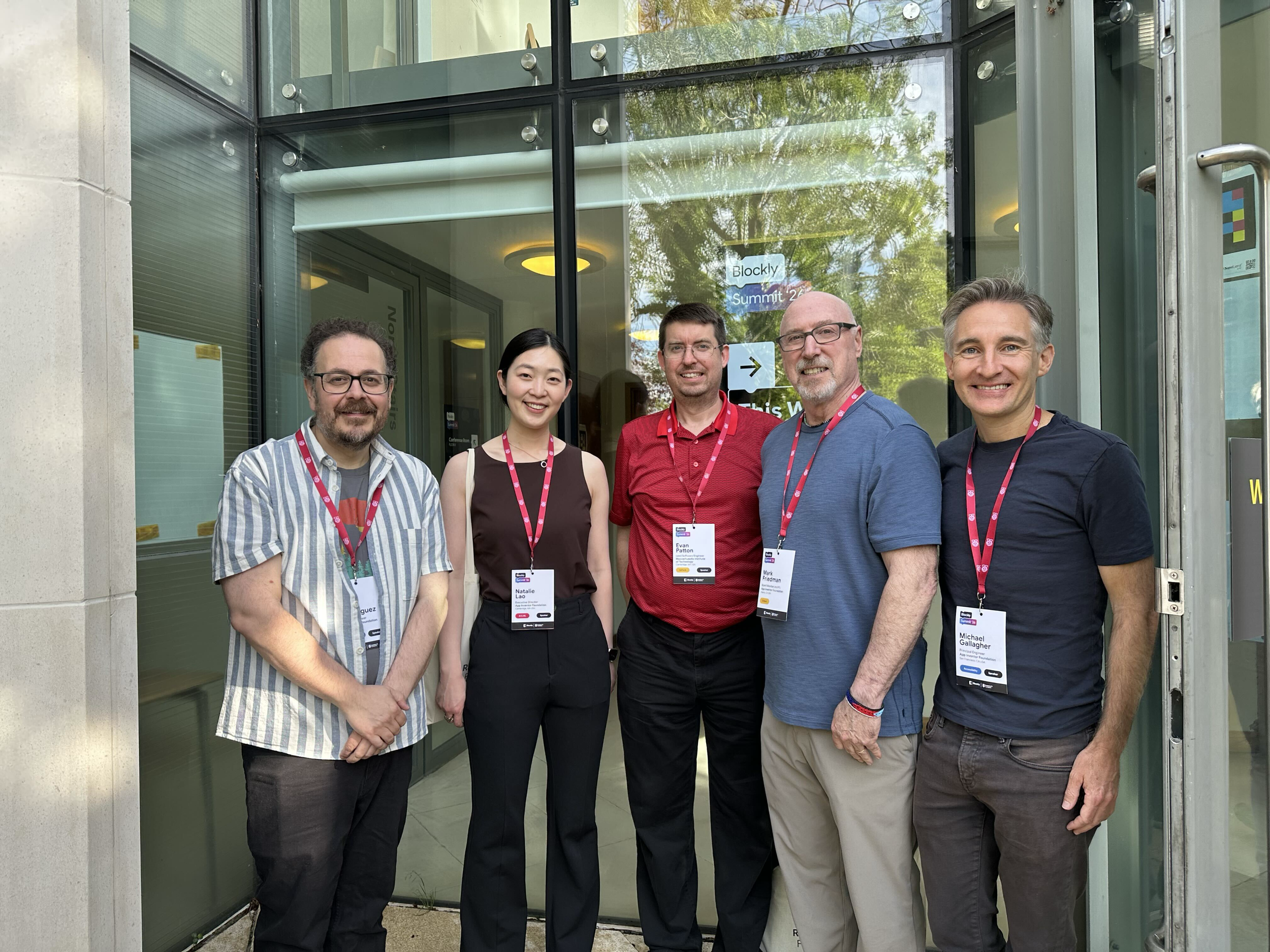
App Inventor team photo at the 2026 Blockly Summit. From left to right: José Dominguez, Natalie Lao, Evan Patton, Mark Friedman, Mike Gallagher
App Inventor was also delighted to receive the “Technical Innovation” award at the end of the Summit!
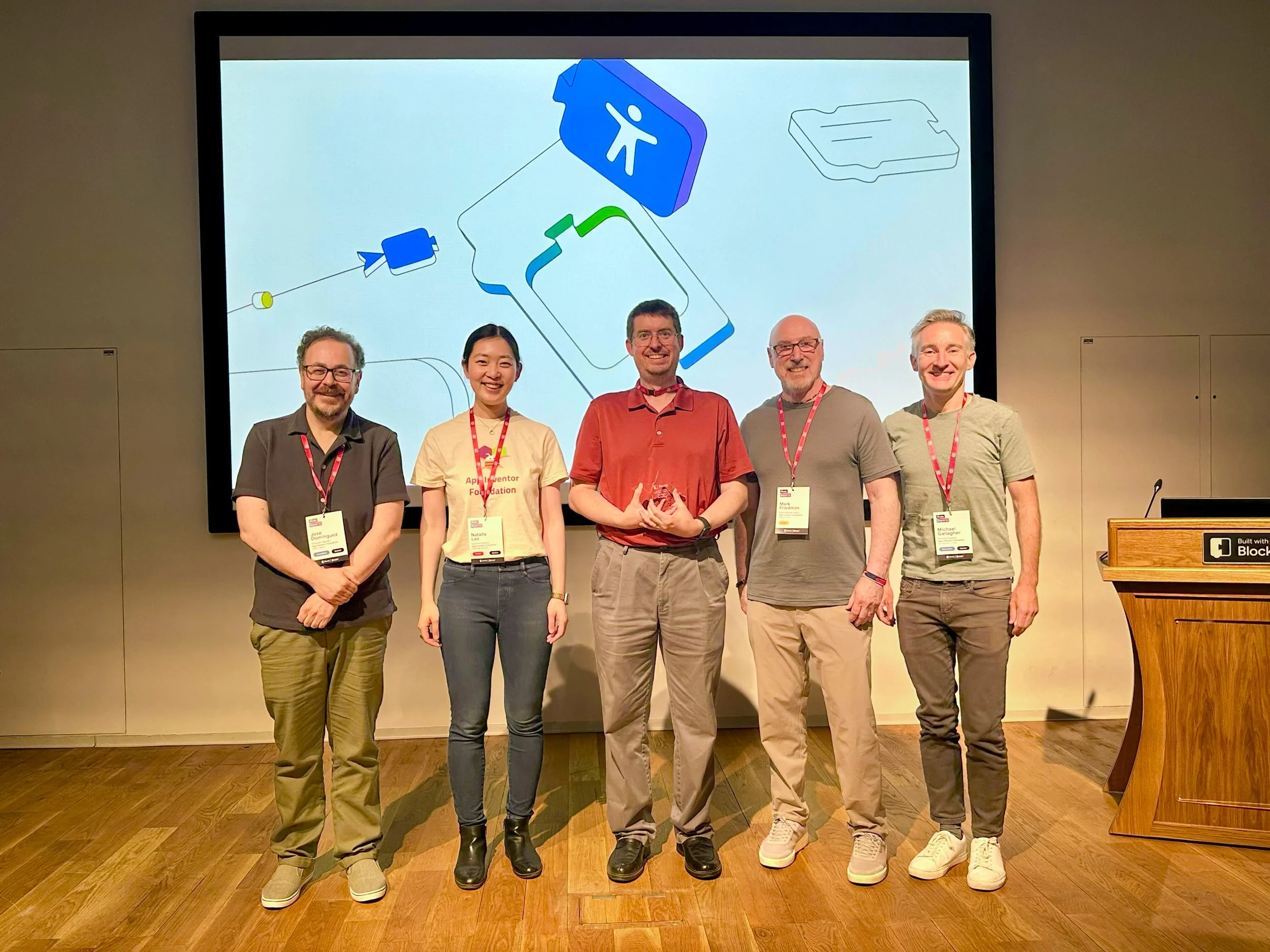
App Inventor receives the Technical Innovation Award at the 2026 Blockly Summit. From left to right: José Dominguez, Natalie Lao, Evan Patton, Mark Friedman, Mike Gallagher.
At the summit José introduced Qualia RS, a series of ideas and experimental implementations to generate on demand, zoomed “in” and “out” representations of code/blocks that adapt to the needs of the user at a particular moment in time.
The system is based on two main principles, “Semantic Zoom” and “Qualia”: semantic zoom is an interactive interface technique in which the representation that the user sees changes qualitatively by zooming in or out. It is mostly used in digital maps but when applied to code it allows for the exploration of the same piece of code at different levels of abstraction.
Qualia are the subjective, individual aspects of conscious experience, and through the use of AI agents interpreting different parts of the code, a user can be provided with a tailored experience of the same code, depending on what they need at that particular moment. Qualia can be applied in 3 main ways, from a conceptual point of view by producing code at different levels of detail that might be appropriate when exploring a new codebase, from a factual perspective, by generating output that is similar to what a compiler will produce, useful when debugging issues or exploring optimisations, and from an accessibility perspective by generating not only representations of code, but fully adapting the interface layout and structure to accommodate different visual impairment related conditions.
On Day 1 of the event, Evan spoke about the new stepping debugger built by MIT senior Jacky Chen. Jacky’s work has been focused on two key parts of debugging projects in App Inventor. First, it introduces behavior to highlight blocks where runtime errors occur, such as if a student attempts to add a number to a user-provided empty string in a text box. The other piece of his work is adding support for breakpoints and stepping through code. Breakpoints allow the app developer to pause execution on a specific block and then go block by block, or statement by statement, to see how the data and visual state of the app change over time. It's a powerful technique used by expert developers to better understand how their code works and we're excited to be able to bring it to App Inventor.
On the second day of the summit, Evan presented work by an MIT Master of Engineering (M.Eng.) candidate Jennet Zamanova that focuses on computing and visualizing the differences between projects. Contents of projects are shown side by side, and changed components/blocks are both color coded and gain icons to draw attention to their differences. In the blocks editor, a new set of navigation buttons help quickly navigate between differences in large projects. We believe this feature will help students and teachers alike better understand how projects evolve over the course of an assignment. Like the previous project, this brings a more advanced tool from software engineering practices and makes it accessible to learners.
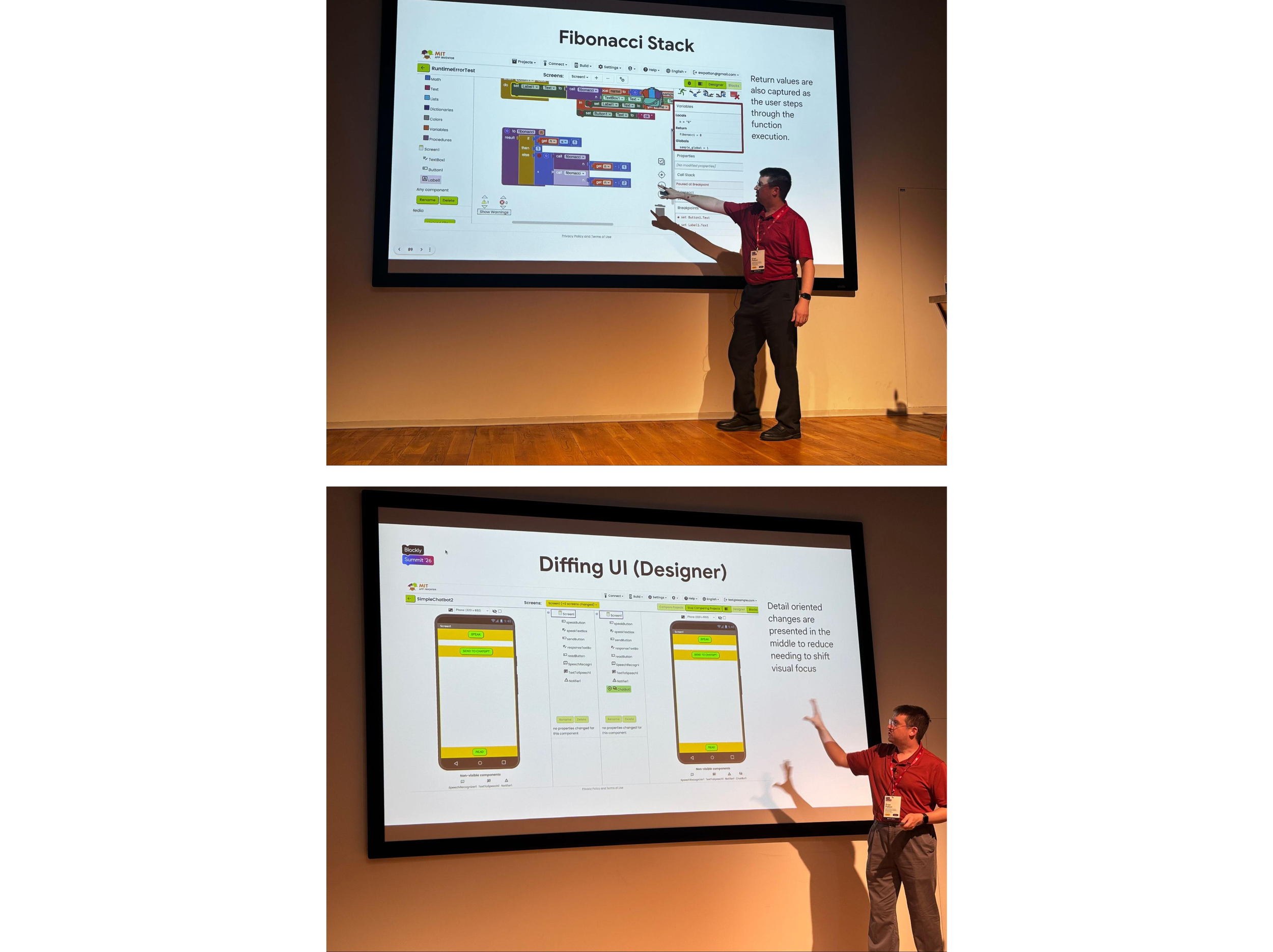
Evan presents improved debugging tools (top) and visualization of app design differences (bottom).
Another project that generated interest was AI2 in a Suitcase, presented by Natalie. AI2 in a Suitcase is an initiative designed to bring the MIT App Inventor platform to low-connectivity and offline environments. After Natalie’s presentation, conference participants from seven countries, including educators and organizations working with low-income communities, refugees, and rural populations, participated in a demo, where they highlighted the potential of offline access to expand opportunities for computational learning and problem-solving where reliable internet access remains a barrier. Participants suggested that expanded access could enable people to develop applications addressing local challenges from weather forecasting and traffic monitoring to small-business management, logistics coordination, and language-learning tools for workforce development. The feedback underscored a common theme throughout the Summit: ensuring that advances in AI and computing education can reach learners in a wider range of social, economic, and geographic contexts.
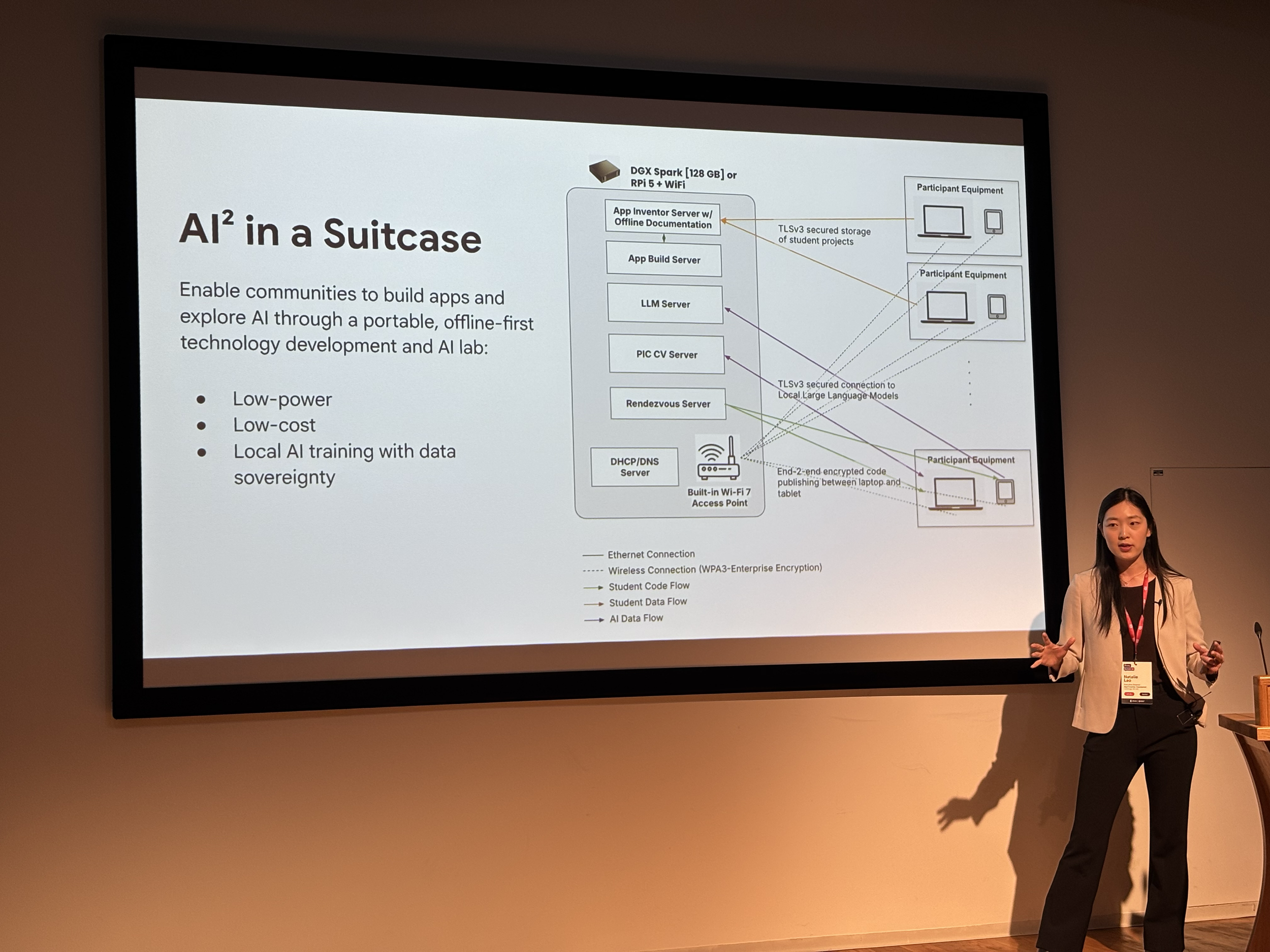
Natalie Lao presents the AI2 in a Suitcase project to enable communities to build apps and explore AI through a portable, offline-first technology development and AI lab.
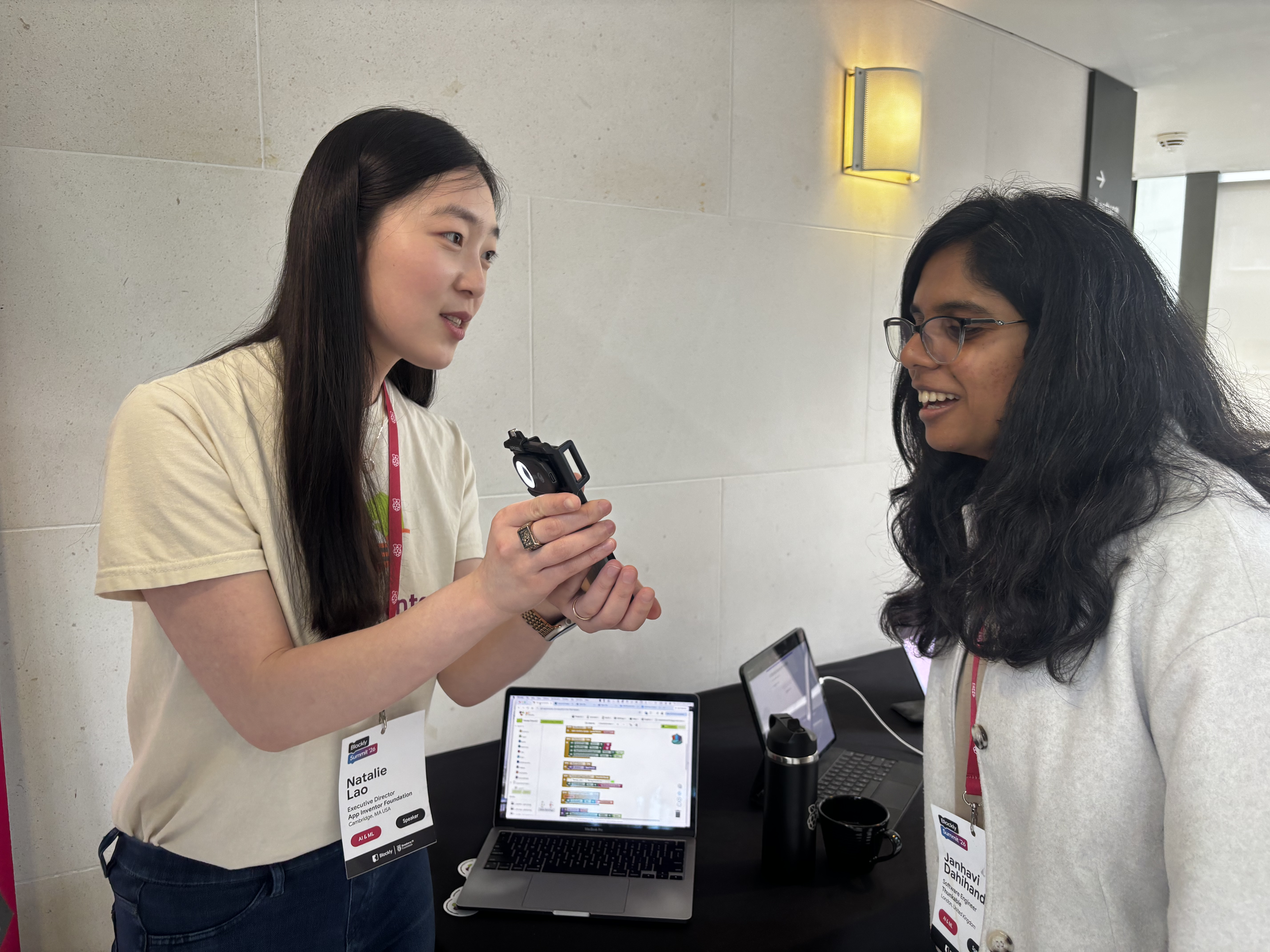
Natalie Lao demos the AI2 in a Suitcase project to Janhavi Dahihand.
Mark Friedman led the first workshop discussion group at the Blockly Summit oriented around the provocative topic: “Is Blockly Relevant in the Age of VIbe Coding?” The consensus of the discussion group participants seemed to be that knowledge of coding was still useful and important in the context of agentic engineering (aka vibe coding) and that Blockly helps to visualize those coding concepts.
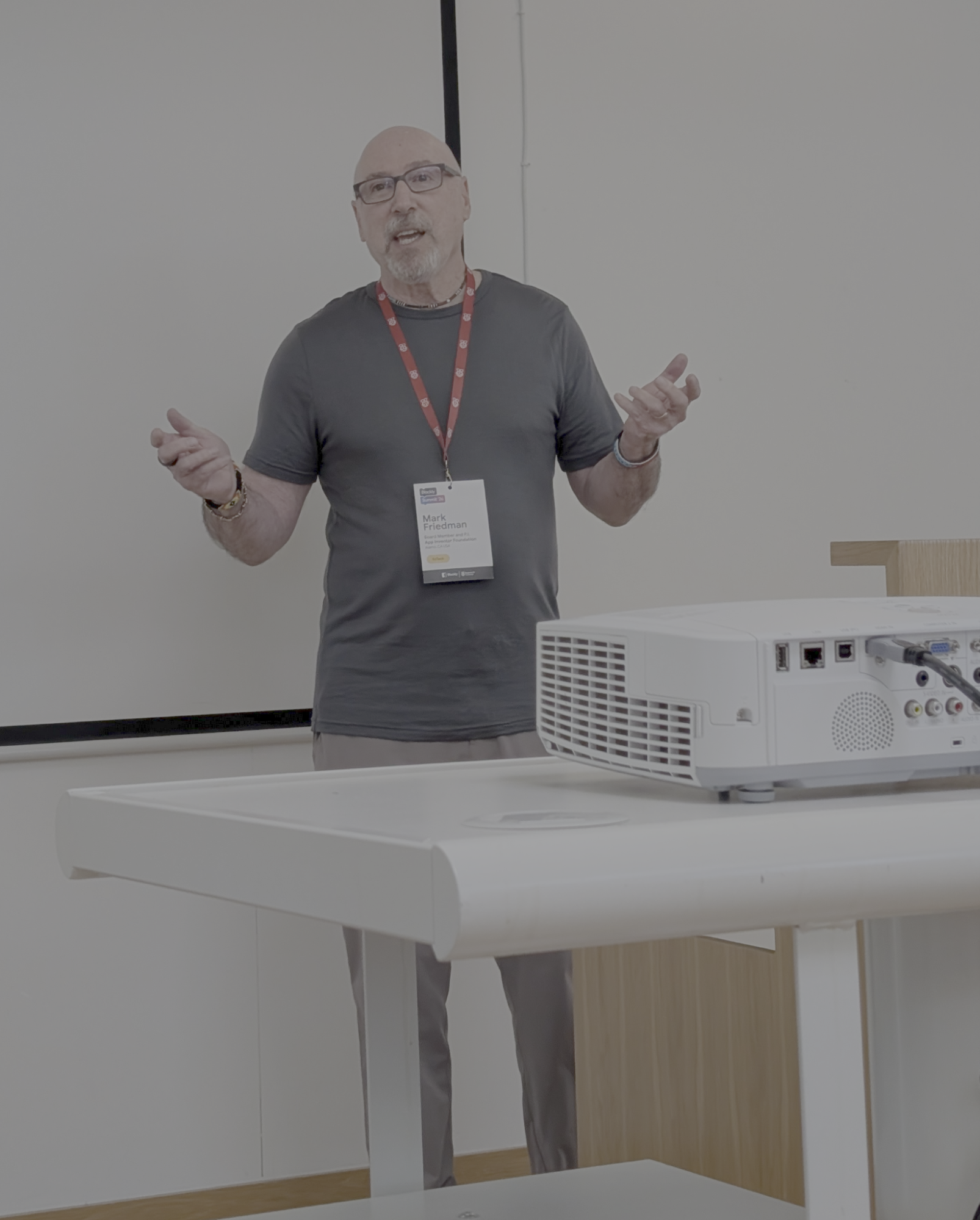
Mark Friedman at the front of a classroom presenting “Is Blockly Relevant in the Age of VIbe Coding?”
Following from this event, the App Inventor team will be participating in the Blockly Accessibility Hackathon at the University of Washington from June 29-30, where we will work with members of the accessibility and edtech community to design open-source solutions for increasing access to technology education. If you'll be there, come say hi!